Height Restrictions Under Review: Aviation and Defence Norms Shape Juhu Tara Road Redevelopment Outlook
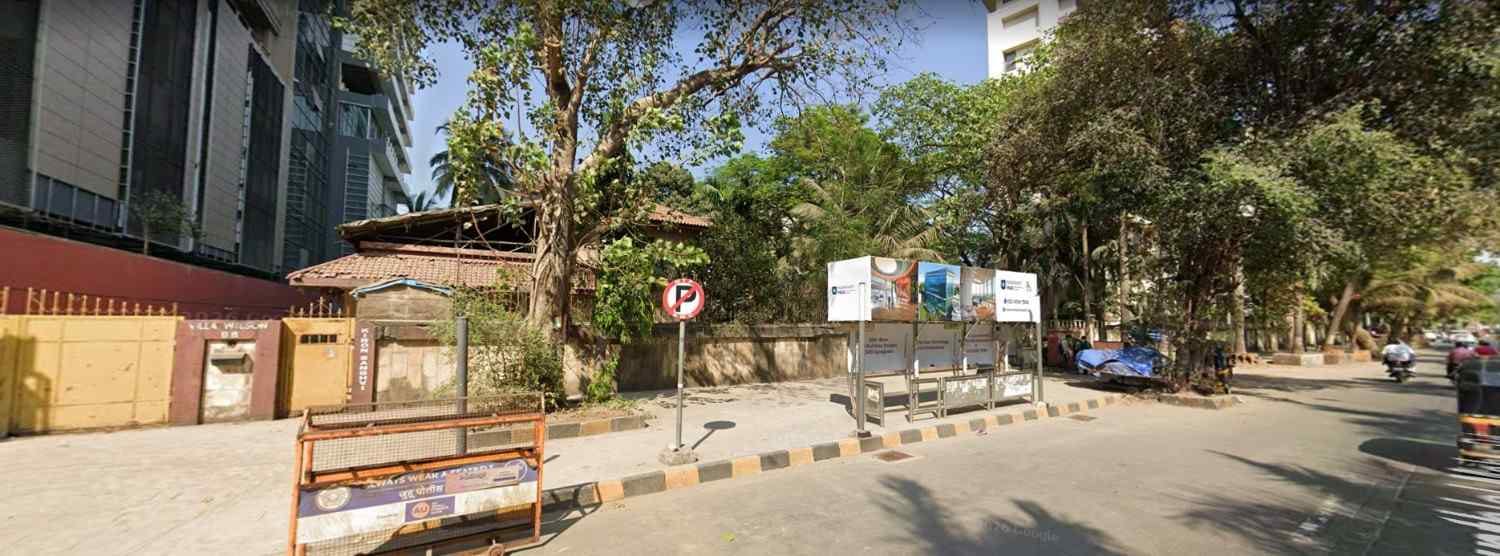
Mumbai’s premium western suburbs, particularly the Juhu Tara Road and DN Nagar belt, are witnessing renewed attention following policy signals from the Maharashtra government regarding redevelopment constraints in aviation-influenced zones. Industry observers note that the unusually low skyline along parts of Juhu Tara Road is not due to weak development potential, but the cumulative impact of aviation and defence regulations that have historically overridden municipal FSI permissions. Under the Development Control and Promotion Regulations, 2034 (DCPR 2034) notified by the Government of Maharashtra, suburban plots are theoretically eligible for higher Floor Space Index through base FSI, fungible FSI, and premium purchases linked to road width and scheme eligibility. However, in several pockets of Juhu, Andheri West, and DN Nagar, the binding constraint has been height clearance from the Airports Authority of India. These areas fall within the Obstacle Limitation Surface of Juhu Airport and the extended funnel influence of Chhatrapati Shivaji Maharaj International Airport. As per the Ministry of Civil Aviation’s Civil Aviation Requirements and AAI’s NOCAS framework, every building proposal must obtain aviation height clearance irrespective of municipal permissions. In many legacy cases along Juhu Tara Road, the permissible elevation translated into roughly ground plus three or four floors, resulting in significant underutilisation of available FSI. Additional sensitivity arises in select pockets due to defence land considerations. Recent statements from the Maharashtra government indicate ongoing engagement with aviation authorities. Market participants believe that even calibrated easing could materially improve redevelopment feasibility on Juhu Tara Road and parts of DN Nagar, where aging cooperative housing stock sits on high value land parcels. For now, developers and housing societies are closely monitoring policy movement, as the next phase of vertical growth in Mumbai’s western suburbs will likely depend more on regulatory clearances than on raw land potential.
Key Real Estate & Infrastructure Announcements in Budget 2026
1. Infrastructure Push Drives Real Estate Confidence Capital expenditure raised to ₹12.2 lakh crore for FY 2026-27 to boost infrastructure development, urbanisation and connectivity — which tends to lift real estate demand across residential and commercial segments. This continued infra emphasis was welcomed by developers as supportive of project execution and land value growth. 2. Infrastructure Risk Guarantee Fund A new Infrastructure Risk Guarantee Fund was announced to provide partial credit guarantees to lenders , reducing perceived risk in financing large infrastructure and real estate projects. This is expected to improve credit flow and bolster private sector engagement in built-environment investments. 3. Dedicated REITs for CPSE Real Estate Assets The Budget proposed creation of Real Estate Investment Trust structures focused on recycling real estate assets owned by Central Public Sector Enterprises (CPSEs) . • This aims to unlock value from under-utilised land and buildings, increase liquidity, and invite institutional and retail capital into real estate via REITs with steady income potential. 4. Focus on Tier-1, Tier-2 and Tier-3 City Development The Budget emphasised infrastructure and urban development in cities with over 5 lakh population — effectively supporting balanced urbanisation beyond metros and opening new growth corridors for housing and allied real estate segments. Proposals like City Economic Regions with dedicated allocations also intend to catalyse investment and quality of life in secondary cities. 5. NRI-Friendly Tax and Compliance Changes While not exclusively a real estate policy, eased tax compliance and repatriation rules for NRIs (such as enhanced investment limits and PAN-based TDS adjustments on property deals) were part of the budget’s broader thrust — likely to influence overseas investment flows into Indian real estate . Notes on Affordable Housing and Direct Homebuyer Support Unlike some expectations, immediate tax cuts specific to housing loans or broader affordable housing incentives were not prominent in the final budget text. Analysts note the Budget instead reinforces infrastructure-led demand and long-term asset productivity rather than short-term consumption stimuli for homebuyers. Bottom line for the real estate sector: the 2026 Budget doubled down on infrastructure and capital markets as the backbone of sustainable growth , introduced new financing and risk-sharing tools, and aimed to draw private and institutional investment into real estate assets — rather than direct tax relief or expanded subsidies. Execution of these frameworks will be key to their real-world impact.
Iconic Parle-G Factory in Vile Parle East Set for Landmark Commercial Redevelopment
Mumbai is witnessing the transformation of one of its most recognisable industrial landmarks. The historic Parle-G factory in Vile Parle East , operational since 1929 and synonymous with India’s most loved biscuit, is officially set to make way for a large-scale commercial redevelopment. The Maharashtra State Environment Impact Assessment Authority (SEIAA) has granted partial environmental clearance to Parle Products for the demolition and redevelopment of the site. This approval allows the company to demolish 21 existing factory structures , clearing the ground for future construction. Parle Products had submitted its redevelopment proposal to the Municipal Corporation of Greater Mumbai (MCGM) in 2025, followed by environmental permissions required to initiate work. The redevelopment is planned on a 13.45-acre land parcel , an exceptionally large holding for Vile Parle East, positioning it among the most significant commercial developments in Mumbai’s suburban belt. Key highlights of the proposed plan include: Around 1.9 lakh sq m of total built-up area Four main commercial buildings with two basement levels each Two dedicated parking towers Office spaces, retail outlets, restaurants, cafés, and food courts Landscaped internal circulation areas The project is being designed as a modern commercial campus. Market and Locality Impact Urban redevelopment of legacy industrial land often acts as a catalyst for surrounding real estate. Analysts expect the project to: Strengthen Vile Parle East’s positioning as a commercial hub Improve rental demand and land values in nearby micro-markets Trigger infrastructure upgrades and better civic amenities
Infrastructure, Not Hype, Will Drive the Next Price Reset from Juhu to Versova
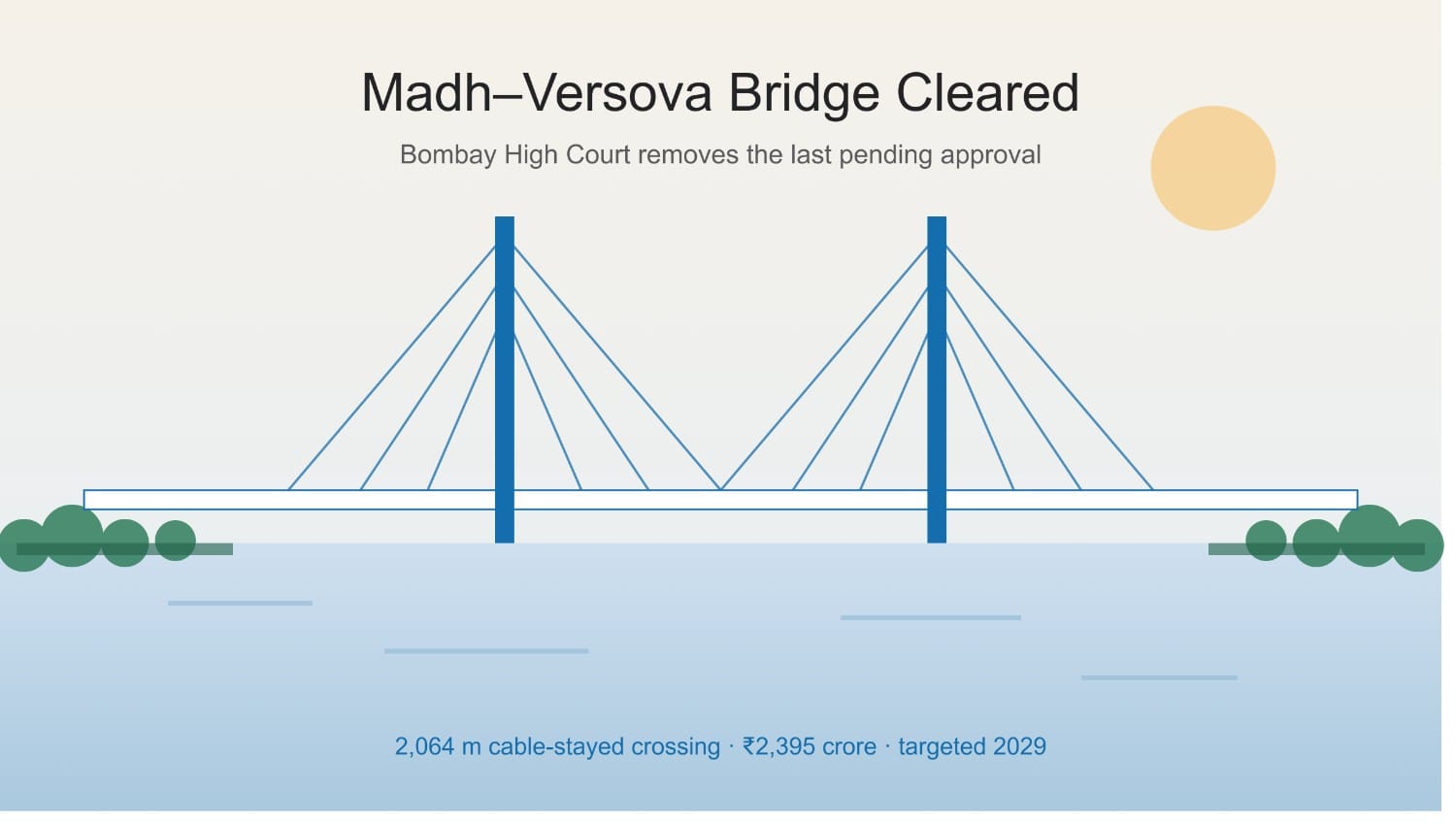
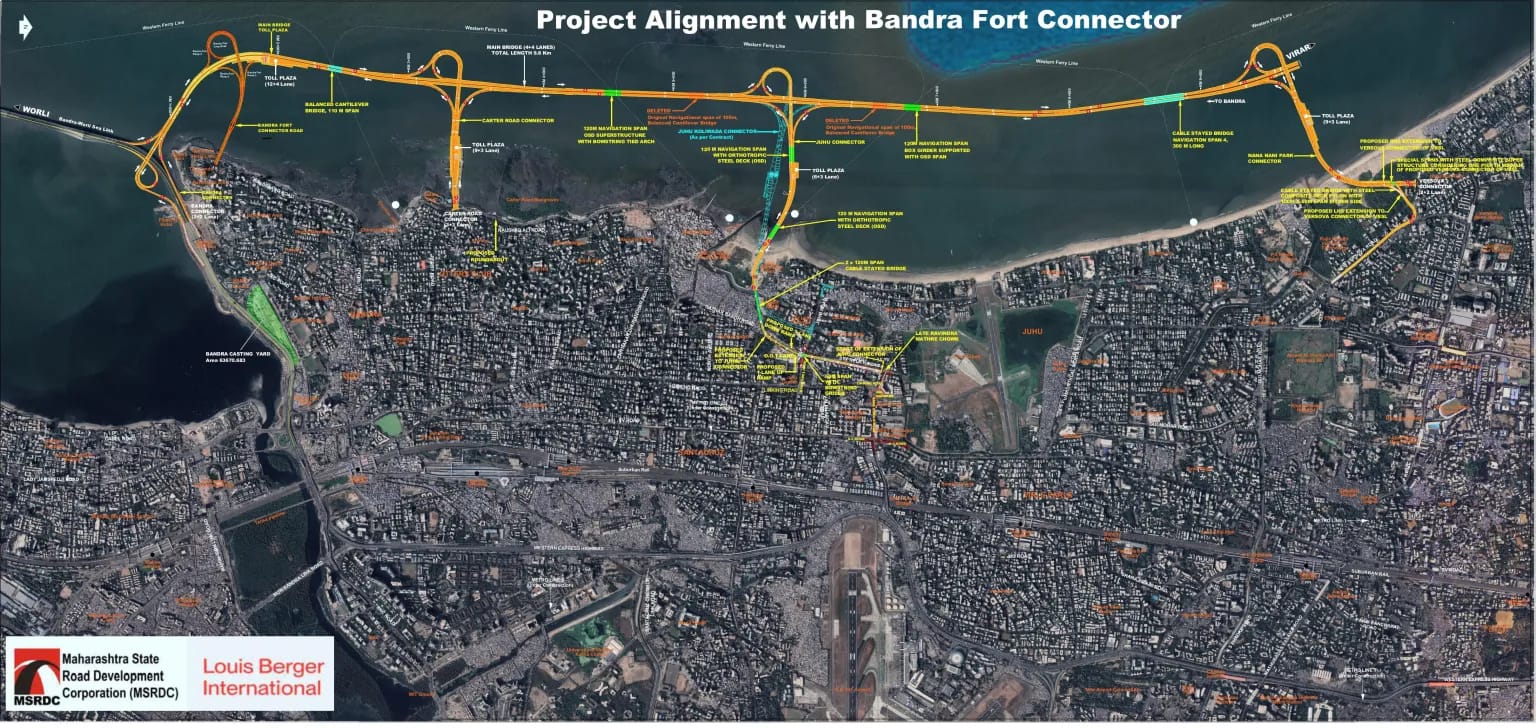
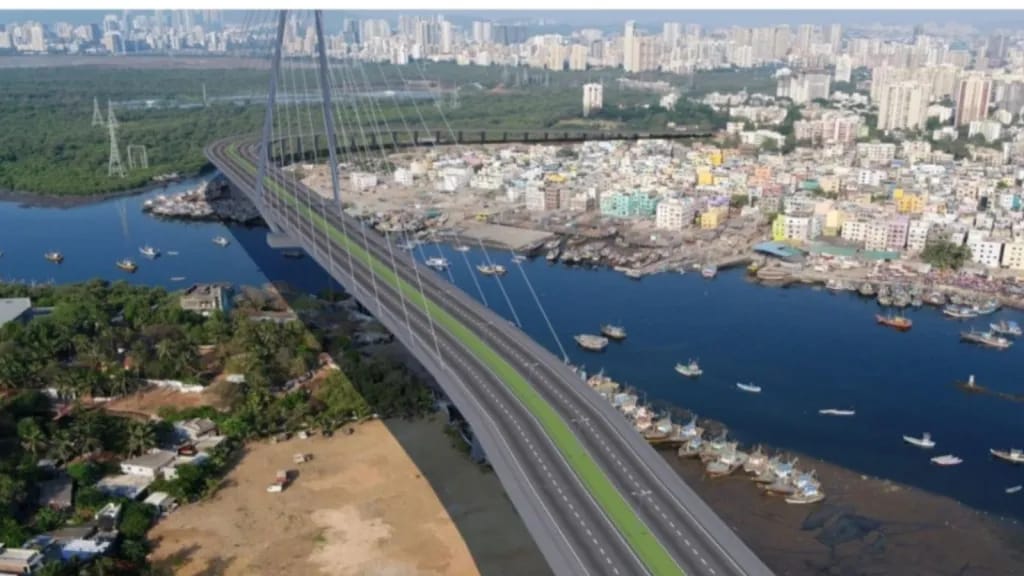
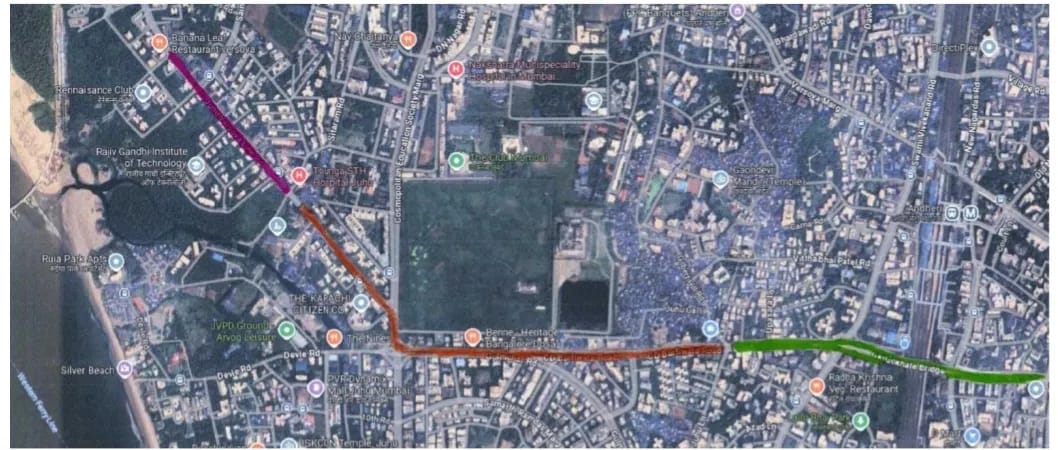
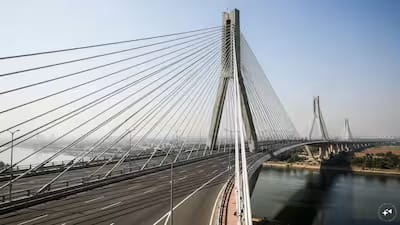
The Juhu–Versova belt doesn’t need marketing. It already has the lifestyle, brand value, and buyer pedigree. What it does need—and is finally getting—is infrastructure that removes friction . And in Mumbai real estate, removing friction is what unlocks the next price band. The biggest shift underway is the Mumbai Coastal Road . While widely seen as a South Mumbai project, its real impact is psychological: once Andheri West and Juhu become realistically reachable from Nariman Point within predictable time frames, these locations stop being “far suburbs” and start behaving like waterfront extensions of the island city . Then comes the Versova–Bandra Sea Link . This is not infrastructure for mass transit—it’s infrastructure for premium mobility . Direct access to Bandra without navigating SV Road or Link Road congestion fundamentally changes how HNIs evaluate Versova and Juhu for end-use living. Add to this the upcoming Barfiwala flyover with a drop-off onto Juhu–Versova Link Road , and you have a classic case of macro + micro connectivity working together . These projects don’t create supply; they compress time. And time compression always leads to price recalibration. The next appreciation cycle here won’t be explosive—but it will be sticky, end-user driven, and floor-specific . Sea-facing units, higher floors, and well-executed redevelopment projects will see disproportionate gains. Smart money doesn’t wait for ribbon-cuttings. It positions during disruption. Juhu: Stability, Prestige, Capital Preservation Coastal Road reduces perceived distance from South Mumbai Limited redevelopment plots = controlled supply Ideal for buyers prioritising capital safety and long-term appreciation Sea-facing and interior lane projects will see widening price gaps Versova: Upside, Access, Repositioning Sea Link directly plugs Versova into Bandra’s ecosystem Historically undervalued relative to lifestyle offering Redevelopment + connectivity = price catch-up opportunity Higher upside for early-stage buyers and investors In short: Juhu protects wealth. Versova grows it.
Andheri West prices may rise after Mumbai Metro Line 2B
1) Metro Line 2B in one page (the hard facts) What it is: Mumbai Metro Line 2B is an elevated corridor from D.N. Nagar to Mandale , designed to strengthen east–west connectivity across suburban Mumbai. Length & stations: 23.643 km with 20 elevated stations . Stations (west to east): ESIC Nagar, Prem Nagar, Indira Nagar, Nanavati Hospital, Khira Nagar, Saraswat Nagar, National College, Bandra Metro, Income Tax Office, ILFS, MTNL Metro, SG Barve Marg, Kurla (E), EEH, Chembur, Diamond Garden, Shivaji Chowk, BSNL Metro, Mankhurd, Mandale Metro. Interchanges (key for value impact): D.N. Nagar (connects with Metro Line 1 ) Bandra (Suburban rail) ITO Junction (planned interchange with Metro Line 3 ) Kurla East (Suburban + Line 4 planned) Chembur (Monorail) Mankhurd (Suburban) MMRDA’s stated travel-time impact: reduction of ~50% to 75% (depends on road conditions). Recent status update on MMRDA page: As of 30.11.2025 , major civil elements show very high completion percentages (pile caps, piers, pier caps/portal beams, girder works, depot). 2) Why this can lift Andheri West prices (the “mechanisms”) A) Andheri West becomes a true multi-directional connector, not just a “Western line suburb” Andheri West already has strong demand, but east–west travel is where pain (time + unpredictability) lives. A fast metro connection that links Andheri side to Bandra/Kurla/Chembur/Mankhurd nodes changes the “mental map” of commute choices. When commute friction drops, the radius of acceptable workplaces expands, and a well-located home gains more bidders. Important nuance: The biggest value effect for Andheri West specifically typically arrives when: the full corridor to major job/rail nodes is operating reliably, and interchanges (Line 1, and later Line 3/4 linkages) create “network effects.” B) Metro-driven demand is no longer theoretical in Mumbai Operational lines are now showing heavy adoption : Metro Lines 2A & 7 have hit record ridership levels and service increases, reflecting sustained commuter shift. This matters because buyers pay more for “proven convenience” than for “promised convenience.” C) The “station premium” tends to concentrate around walkable catchments In many cities, value uplift clusters within a walkable/short-access radius around stations, then fades with distance. You don’t need a blanket Andheri West-wide price jump for the thesis to be true: even a micro-market lift around the most convenient access points can pull up comparables over time. In Andheri West’s case, the likely beneficiaries are: pockets with clean access to D.N. Nagar and the Line 2B approach corridor (and good last-mile), buildings that offer quiet + connectivity (because elevated metros can introduce noise on certain frontages). D) Line 2B stitches together multiple high-demand ecosystems Look at the station list and interchanges: Bandra (suburban), Kurla (suburban, future network), Chembur (monorail), plus the wider BKC influence zone. As these nodes integrate, Andheri West becomes more attractive to: senior professionals with multi-node work routines (meetings across BKC–Andheri–Chembur), tenants seeking predictable travel times (which supports rents, which supports capital values). 3) What research says (and why you should be cautious with “guaranteed appreciation”) Real estate uplift from metros is common , but not automatic. A Mumbai-focused study on the VAG corridor (Line 1) reports an upward movement in prices/rents/transactions and travel-behavior changes (survey-based). But another Mumbai study (EPW paper using broader zone-level data and “upcoming metro” variables) found the upcoming metro effect on residential prices not statistically significant in their model, and warns about market distortions and data limitations. Takeaway: Expect a probability-weighted uplift , not a guarantee. The uplift is strongest when: operations start and stabilize, interchange connectivity actually works end-to-end, and last-mile access is solved (walkability, feeder, parking, etc.). 4) Andheri West: where the price pressure could come from (practical market logic) Demand-side push More buyers/tenants value “20–40 minute predictable commutes” over “45–90 minute roulette.” Investors track rental resilience; improved connectivity often widens tenant pools. Supply-side constraint Andheri West is already supply-constrained in many premium pockets (redevelopment cycles, limited new large land parcels). When demand rises faster than livable supply, prices tend to firm up. “Stage-of-network” effect You often see two waves: Expectation premium (pre-operations): selective and story-driven. Proof premium (post-operations): broader, lender-friendly, comp-based.
Bandra Bay: India's Most Unique & Iconic Luxury Waterfront Development
Mumbai is on the brink of a defining urban transformation, and Bandra Bay stands at its centre.This iconic waterfront precinct is envisioned as India’s equivalent of global landmarks like Marina Bay and Palm Jumeirah, with ~8 million sq. ft. of luxury residential and retail development planned along the Bandra Reclamation stretch. One of the report’s key infographics illustrates Bandra Bay’s strategic location advantage . Positioned just 10 minutes from Bandra Kurla Complex (BKC) , Mumbai’s financial powerhouse, the area is set to benefit from a sharp rise in executive housing demand. With BKC’s Grade-A office stock expected to grow from 18 msf in 2025 to 25 msf by 2030 , and the CXO population nearing 8,000 , Bandra Bay emerges as the preferred luxury residential catchment for top decision-makers.. Infrastructure is the strongest catalyst shaping this growth story. A dedicated infographic in the report maps transformative projects such as the Mumbai Coastal Road , Metro Lines 2B and 3 , the Bullet Train terminal at BKC , and enhanced airport connectivity. Together, these initiatives aim to cut travel times by up to 40–60 minutes , positioning Bandra Bay as one of the most accessible waterfront districts in the country. From a pricing perspective, the report’s housing analysis infographic reveals that sea-facing homes in Mumbai command a 15–20% premium , with Bandra Bay expected to exceed this due to limited supply, branded developers, and landmark architecture. At a time when Worli prices trade nearly 46% higher than Bandra West , Bandra Bay offers a compelling upside for long-term capital appreciation. In summary, Bandra Bay is not just another luxury address. It is Mumbai’s next global waterfront narrative — driven by infrastructure, scarcity, and aspiration.
Mumbai Real Estate 2026: A Skyward Look at What’s Next
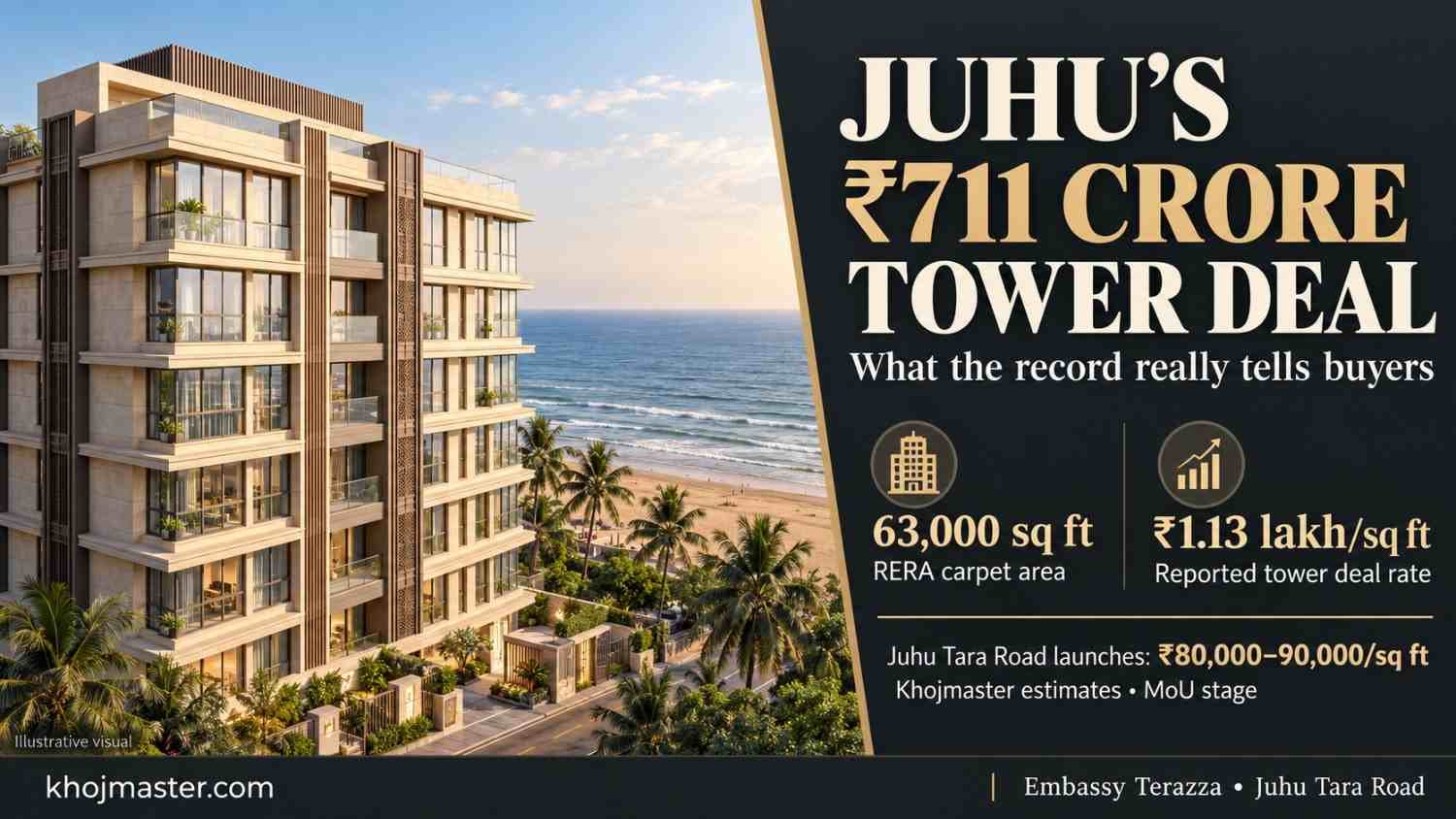
If Mumbai’s property market were a storybook, 2025 would have been the chapter filled with record registrations, luxury deals, and infrastructure early wins… and 2026 promises to be the chapter where those plotlines spring vividly to life. According to industry forecasts and market intelligence, Mumbai’s real estate scene in 2026 will be shaped by steady growth, sharper connectivity, premiumisation, and demographic rhythms that are rewriting how people live and invest in India’s financial capital. 1. Demand Continues Upward, Prices Keep Momentum 📈 Analysts expect Mumbai’s residential property prices to grow moderately but steadily in 2026, with many developers forecasting more than a 5% rise year on year. This implies: • Sustained buyer confidence among end-users and investors. • A rating of Mumbai as a stable, not speculative, market. • Price resilience even as affordability concerns persist in the megacity. While growth won’t be meteoric like some smaller markets, consistency will be the name of the game for 2026 — and that’s a very bullish sign for long-term investors. 2. Premium & Luxury Segment Remains a Showpiece 💎 Mumbai’s high end is doing more than just holding ground — it’s breaking narratives. In 2025, extensive luxury homes fetched record deals, with some flagship properties fetching ₹700-plus crore and intense investor interest in premium addresses. Expect 2026 to keep that energy, driven by: • Ultra-HNI investments aiming for trophy assets. • Branded residences and professionally managed luxury communities gaining cachet. This segment will continue setting price anchors that uplift neighbouring markets. 3. Infrastructure: The Hidden Macro-Engine 🚆🚇 If real estate is the body, infrastructure is its skeleton — and Mumbai is getting fit. Three major metro lines are on track for launch in 2026, improving east-west and suburban connectivity and smoothing the city’s travel pain points. On the horizon as well: • Expanding metro corridors that connect underserved catchments • Better road linkages and transit access • Satellite-city integrations like Navi Mumbai and NAINA gaining strategic weight Such upgrades don’t just cut commute times — they alter property valuations across corridors, often with “before” and “after” pricing gaps. 4. Redevelopment & Renewal 🏗️ Mumbai’s iconic redevelopment wave will keep rolling through 2026 and beyond. Vast repositioning projects — particularly in suburbs — are expected to unlock tens of thousands of new homes over the coming years. This trend supports: • A steady but diverse housing supply • Modern living standards in erstwhile older zones • New investment inflection points as micro-locations evolve Cities like Mumbai don’t really “grow outward” — they transform inward — and redevelopment is the primary vehicle of that change. 5. Buyer Profiles: From Starter Homes to Status Homes 🏡🌆 2026 will see: • Continued strength in mid-segment housing supported by working professionals and families seeking quality of life. • A persistent premium segment that’s less volume-oriented but value-driven. • Emerging interest in lifestyle-centric, flexible living spaces that match modern aspirations. Mumbai’s multi-strata demand — from first-time owners to HNIs — ensures the market isn’t a monolith but a mosaic of buyer priorities. 6. Institutional Capital & Market Discipline 💼 2026 isn’t just about brick and mortar — it’s about capital flows and discipline. With institutional investment expectations in the billions, and more stringent financing norms, the sector is becoming more transparent and accountable. This means: • Better-executing developers rise to the top • Buyers gain confidence from quality delivery timelines • Market resilience improves overall A Final Word 2026 in Mumbai won’t be about explosive jumps — it will be about smart elevation: strategic growth, quality over speed, thoughtful infrastructure integration, and diversified demand. For homebuyers, it’s a year of measured optimism. For investors, it’s a year where foresight — not fear — will reward the patient mind. For the city itself, 2026 could be the year its skyline feels a little more connected, a little more complete, and a little more Mumbai. 🏙️
Vile Parle West: Exploring Emerging Real Estate Opportunities in a Prime Mumbai Neighbourhood
Vile Parle West is rapidly emerging as one of Mumbai’s most sought-after residential micro-markets, blending established neighbourhood charm with modern lifestyle conveniences. Nestled between Juhu and Andheri, the area offers a unique fusion of quiet residential streets, cultural vibrancy, and proximity to major urban hubs. Its well-planned infrastructure, reputed schools, and healthcare facilities make it especially attractive to families and professionals alike. Connectivity remains a standout advantage of Vile Parle West. The neighbourhood is seamlessly linked via the Western Express Highway, providing fast access to the Mumbai Airport and central business districts. The upcoming metro extensions and improved road networks are expected to further enhance commuting ease, positioning Vile Parle West as a strategic choice for both residents and investors. Easy access to rail and bus networks adds another layer of convenience, making daily travel smooth and efficient. In recent years, property prices in Vile Parle West have shown strong resilience and steady appreciation. Driven by heightened demand for premium homes and limited land availability, the market has seen upticks in valuations that appeal to both end-users and investors. With new developments offering modern amenities and thoughtful design, buyers are drawn to the promise of quality living. As infrastructure projects mature and demand continues, the area’s real estate outlook remains optimistic, presenting compelling opportunities for those looking to invest in Mumbai’s western suburbs.
Mumbai Real Estate Insights | Market Trends, Guides & News